

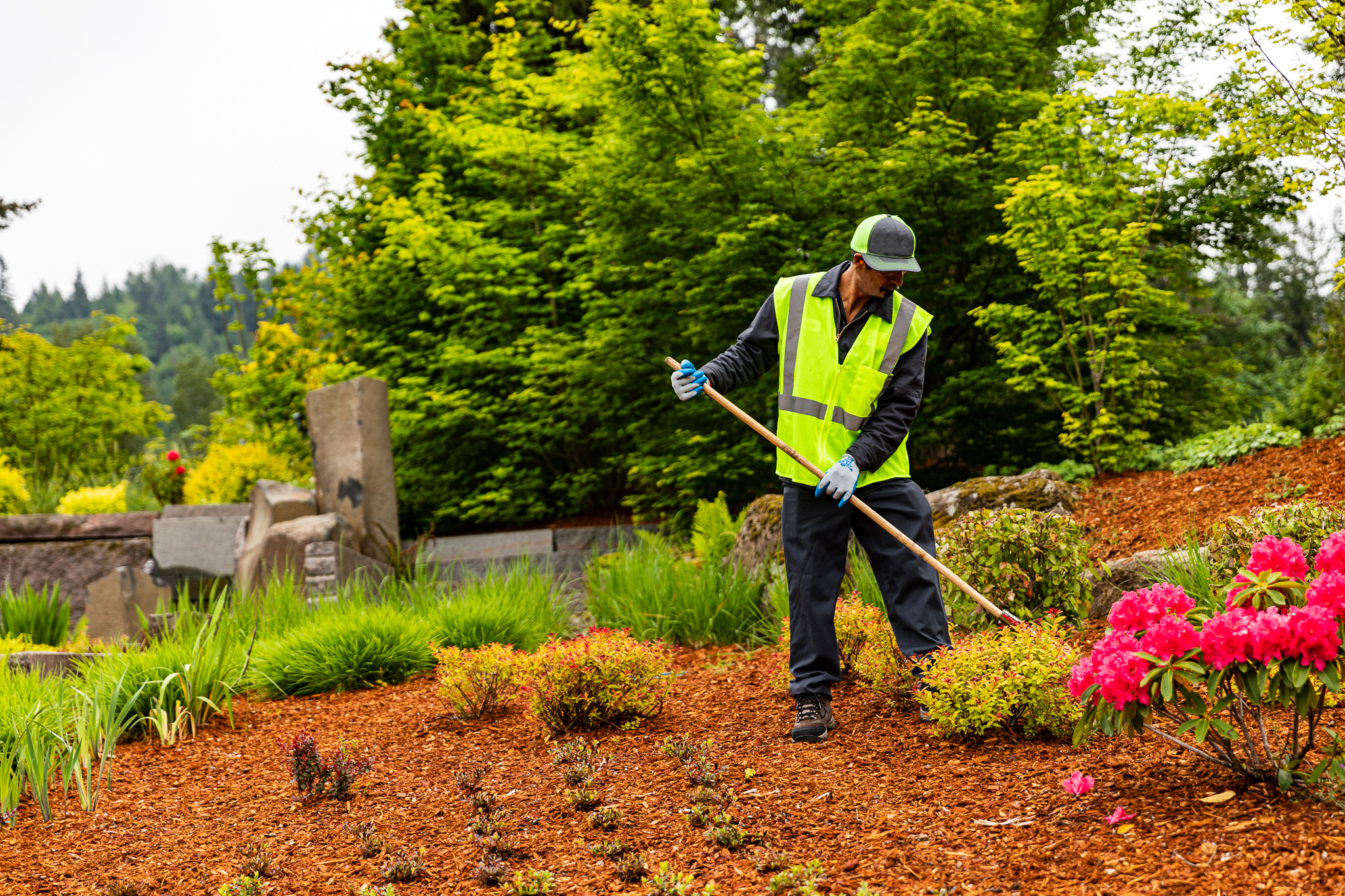
When property managers evaluate their landscape budgets, mulch is often one of the simplest — yet highest-return — investments they can make. Whether you manage an office campus, retail center, HOA community, industrial site, or multi-family property, mulch plays a major role in plant health, irrigation efficiency, weed control, and curb appeal.
Below, we break down why mulch is essential across all regions (PNW, California, Mountain West, Texas, and Florida) and why winter is one of the best times to install it.

What Is Mulch — and Why Does It Matter?
Mulch is a protective layer of organic material placed on top of soil. In commercial landscapes, the most common types include:
- Bark mulch
- Wood chips
- Compost blends
- Shredded mulch
While mulch improves aesthetics immediately, its real value comes from how it transforms soil conditions and long-term plant performance.
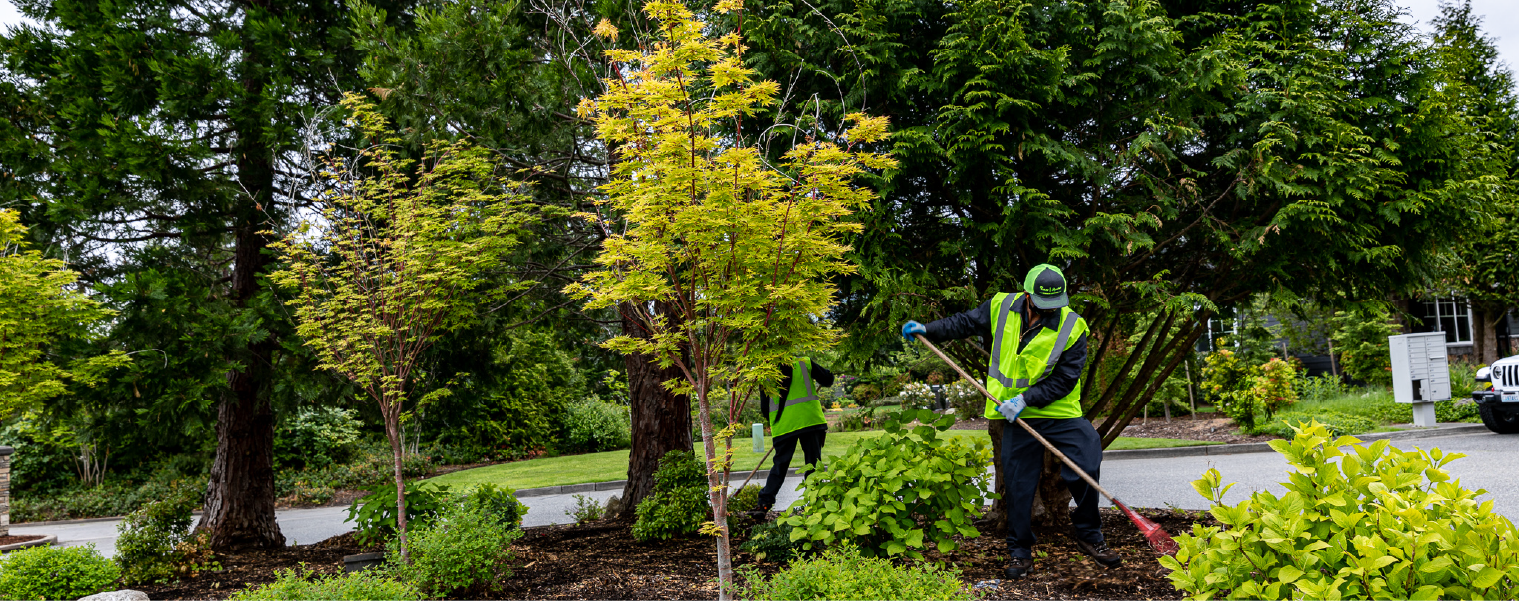
Top 5 Reasons Mulch Is One of the Best Landscape Investments
1. Mulch Protects Plant Roots From Temperature Extremes
Commercial landscapes experience dramatic seasonal swings — especially in winter. Mulch works like insulation:
- In cold climates (PNW, Colorado, Northern California), it protects roots from freeze–thaw cycles.
- In warm climates (Texas, Florida, Southern California), it keeps root zones cool and reduces heat stress.
Stable root temperatures lead to healthier plants, fewer replacements, and lower long-term costs.
2. Mulch Helps Retain Soil Moisture — Reducing Irrigation Costs
Mulch keeps water in the soil by slowing evaporation. This is especially valuable in regions facing drought pressure or strict watering schedules.
Benefits include:
- Less frequent irrigation
- Reduced water bills
- Improved soil moisture during dry months
- More efficient plant uptake
In the PNW and Northern states, mulch also prevents winter desiccation — a common cause of evergreen damage.
3. Mulch Suppresses Weeds Naturally
A properly mulched bed blocks sunlight from reaching weed seeds, significantly reducing germination.
This means:
- Fewer weeds to remove
- Lower maintenance labor
- Reduced herbicide use
- Cleaner, more polished commercial appearance
For properties with high foot traffic or visibility (retail centers, office parks, HOA entrances), weed suppression alone makes mulch a high-ROI investment.
4. Mulch Improves Soil Health Over Time
As mulch breaks down, it enriches the soil with organic matter. Healthy soil leads to:
- Better drainage
- Stronger root growth
- Improved nutrient availability
- Reduced compaction
This is particularly beneficial in regions with clay soils (Texas), sandy soils (Florida), or areas with heavy rainfall (PNW).
5. Mulch Instantly Enhances Curb Appeal
Few landscape improvements offer such immediate visual impact. Mulch gives commercial properties a clean, uniform, well-maintained look.
Mulch improves:
- Entrance statements
- Signage beds
- Drive-by appeal
- Tenant and visitor perception
- HOA satisfaction scores
A fresh mulch layer can completely transform a tired landscape in just a few hours.
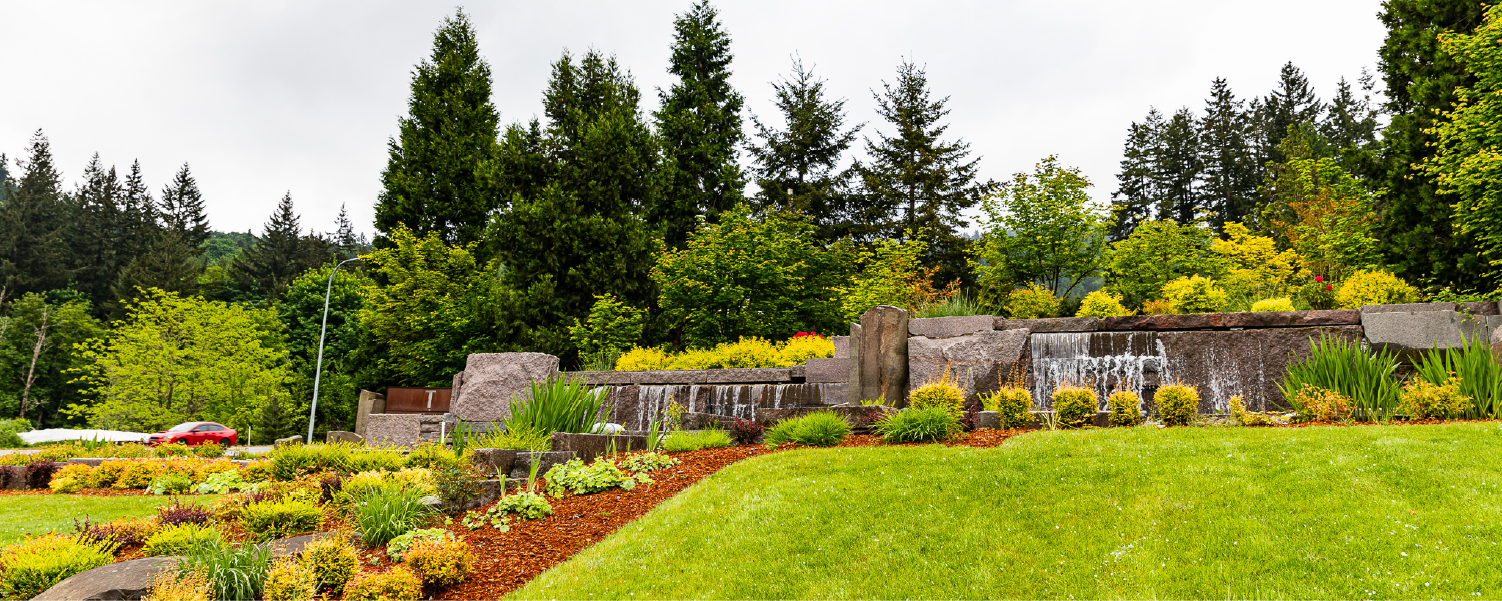
Why Winter Is the Best Time to Install Mulch
Many property managers think spring is mulch season, but winter (especially December through February) is one of the most beneficial times to install it.
Winter mulch protects roots during the coldest months.
It buffers plants from harsh temperature drops and prevents freeze–thaw stress.
Mulch supports irrigation reduction in dry winter climates.
In regions like the PNW and Mountain West, soils dry out quickly in winter due to wind and low humidity.
Better scheduling and availability.
Winter is a slower period for enhancements, meaning faster turnaround and more competitive scheduling.
Your landscape looks fresh heading into spring.
Mulch applied in winter still looks great when warmer weather returns — giving properties a strong head start.

How Often Should Commercial Properties Mulch?
Most properties benefit from mulching once per year, though high-visibility landscapes may need touch-ups every 6–9 months.
Impact depends on region:
- PNW: Annually; high moisture can accelerate decomposition.
- California: Annually to retain soil moisture and regulate heat.
- Colorado: Annually for freeze protection and water retention.
- Texas: Twice a year for moisture control and sun exposure.
- Florida: Twice a year due to rapid breakdown in tropical climates.
Mulch Depth: How Much Do You Need?
For commercial sites, the recommended depth is 2–3 inches, which provides optimal weed suppression and moisture retention without smothering plants.
Mulch: A Low-Cost Upgrade With Long-Term ROI
Compared to plant replacements, irrigation repairs, or major enhancements, mulch is one of the most cost-effective investments available. It simultaneously improves plant health, reduces water use, enhances visual appeal, and prevents expensive long-term damage.
Get Professional Mulch Installation From Monarch Landscape Companies
Monarch provides region-specific mulch solutions across the Western U.S. and Gulf Coast, tailored to each climate and property type. Our teams ensure:
- Correct depth and application
- Clean bed lines
- Precise installation around shrubs and trees
- Proper prep and weed removal
- High-quality mulch materials

If you want healthier landscapes, reduced maintenance, and stronger curb appeal heading into the new year, mulch is the perfect place to start.
Ready to upgrade your commercial landscape?
Contact your local Monarch branch for a mulch estimate or to schedule winter installation.
