

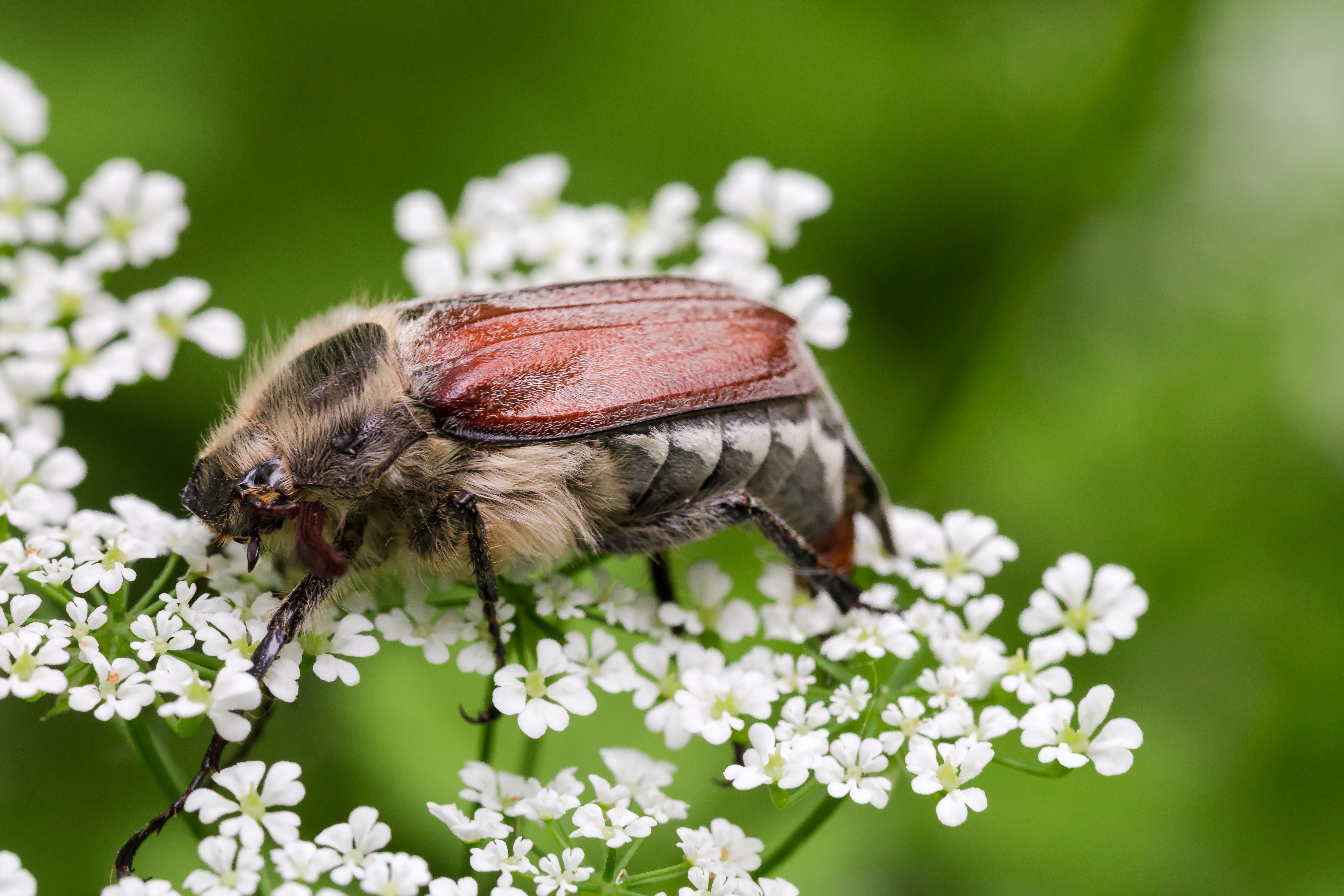
Across the Pacific Northwest, properties of all sizes are facing a rapidly emerging turf threat: the European chafer beetle. Initially seen as a minor pest, this invasive beetle has begun causing significant damage to commercial lawns across the region. Effective European chafer beetle control starts with early, proactive steps. Having the right plan in place can make the difference between a healthy landscape and costly turf replacement. Monarch Landscape works with property owners and managers across the PNW, providing detailed prevention strategies to cut down on chafer beetle infestation risk.

What Is the European Chafer Beetle?
The European chafer beetle is an invasive insect whose larvae live underground and feed on turfgrass roots. The adult beetle itself is actually much less of a threat in itself. But their larvae can eat away at large sections of lawn while fully out of sight. By the time you notice the damage, your lawn may already be on its last legs.
Property owners and managers most often start seeing chafer beetle activity around May to July. At this point, the adults are most active. The threat comes in late summer to the following spring, though. During these months, their larvae (or grubs) will gladly feast on turfgrass roots. However, because the damage occurs beneath the surface, properties often appear stressed or patchy long before the cause is identified.
Signs of European Chafer Beetle Damage
Chafer Beetle activity is often mistaken for drought stress or general turf decline. However, keeping an eye out for a few key signs will help you narrow down the possibilities.
Look for indicators such as:
• Thinning, yellowing, or dead patches of turf
• Turf that lifts easily from the soil due to root damage
• Increased activity from birds, raccoons, or skunks feeding on larvae
• Rapid turf deterioration during spring and early summer
Once these signs are visible, damage is already well underway. That is why proactive European chafer beetle control is more beneficial than a reactive approach.
Why the Chafer Beetle Threat Is Growing in the PNW
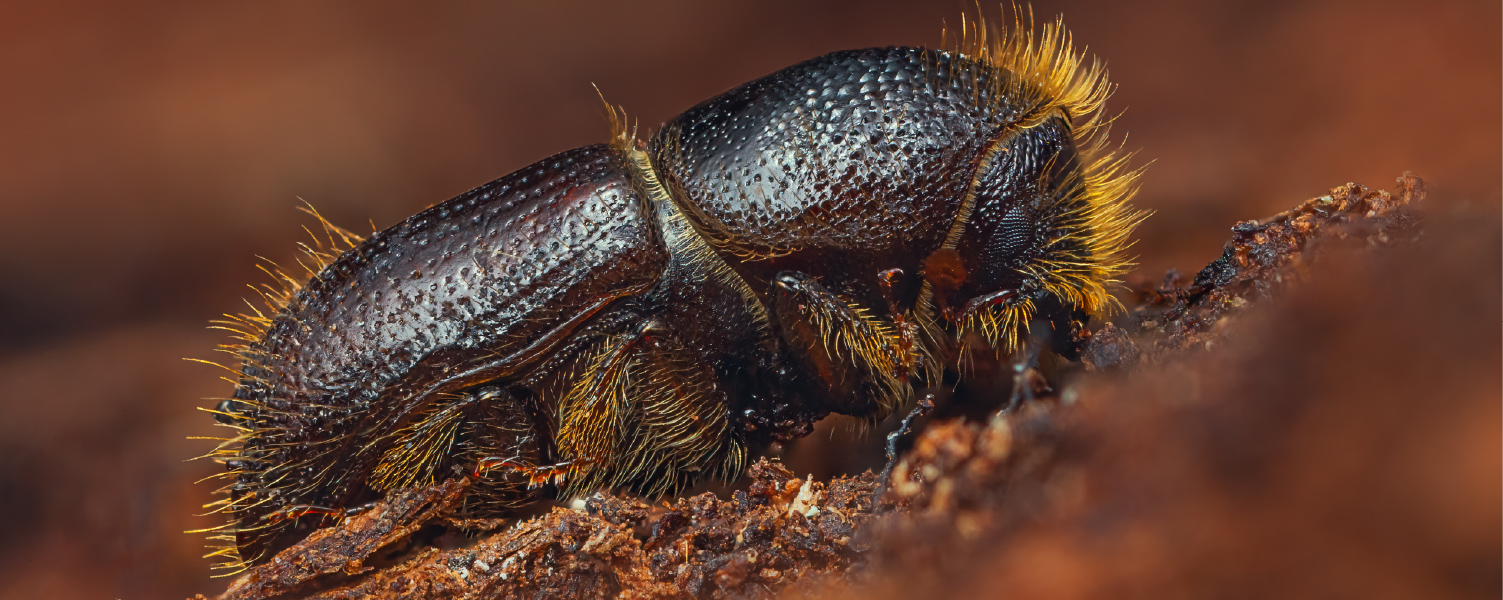
European chafer beetles thrive in the cool, moist conditions common throughout the Pacific Northwest. Good news for them, but bad news for lawns. As chafer beetle populations expand, lawns across commercial properties, HOAs, campuses, and municipal sites are increasingly vulnerable.
Another issue is that many properties do not have prevention strategies. So as the chafer beetle spreads, it meets little resistance in the lawns across the region. Once they arrive, infestations can escalate quickly. Before you know it, what seems like one lawn problem area can shift into widespread turf loss.
The Value of Early Detection and Prevention
Proactive management is the most effective approach to European chafer beetles. Even better, it is the most cost-efficient path as well. Preventive measures are generally straightforward and easily implemented by a landscaping crew.
Early action allows landscape teams to:
• Apply preventative treatments before larvae cause extensive root damage
• Monitor turf health and pest activity throughout the season
• Reduce the need for emergency repairs or turf replacement
• Protect long-term turf performance and appearance
Preventative programs are significantly less disruptive and more economical than reactive solutions after damage has occurred. If your lawn has died out, the only option often will be to replace entire sections.
Why This Should Be a Monthly Conversation
European chafer beetle activity evolves throughout the season, making ongoing monitoring essential. Proactive steps reduce the risk of infestations, but properties will need additional framework for if conditions change. When you hire the right landscaping crew, they will routinely assess for:
- Risks and lawn vulnerabilities
- Treatment timing and intensity
- Turf condition and health
Having a plan in place ensures a faster response to potential issues during peak seasons. Readiness helps minimize surprises and better controls costs in the long run.
What Does a Proactive Plan Look Like?
- Routine inspections and grub monitoring
- Preventive grub lawn treatment
- Follow-up inspections
- Irrigation adjustments
- Turf health management
- Aeration, overseeding
- Minor turf repair
Side-by-Side Costs for Proactive vs. Reactive Chafer Beetle Control
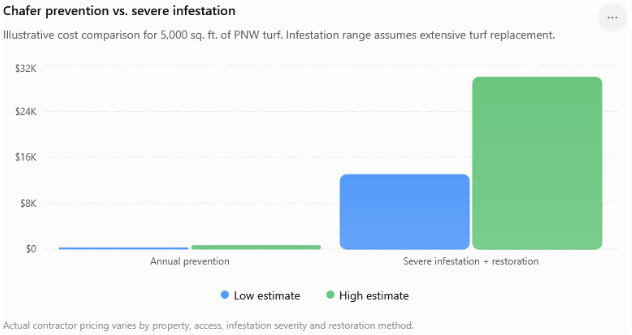
Costs for European chafer beetle prevention and control can vary significantly. Often, the most cost-effective solution is to hire a landscaping company like Monarch that can bundle services. When adding chafer beetle control to your landscape maintenance package, it can come out to < $1,000 per year (for a 5,000 square-foot lawn). In contrast, typical costs for resodding the same-sized area can run into the thousands or tens of thousands of dollars.
The cost risk only grows with the property size. Larger commercial properties could easily spend 20,000–30,000+ dealing with the fallout of a chafer beetle infestation, and that is on the resodding alone. Of course, final costs will depend on property details, contractor rates and availability, and more. But across the board, the data stands that having a preventive strategy is the surest way to protect any PNW lawn.
Protect Your Landscape Before Damage Takes Hold
European Chafer Beetles are no longer a future concern. Instead, they are a current and growing issue for properties across the Pacific Northwest. The most successful properties are those that take early, proactive steps to protect their landscapes.
If you’re planning seasonal services or reviewing turf health, now is the time to evaluate prevention options and monitoring programs. Early action protects your investment and keeps landscapes healthy, resilient, and visually strong throughout the year. Reach out to Monarch Landscape for a European chafer beetle control strategy tailored to your property's features.
